
The Vulture Chronicles: Lara Eastburn
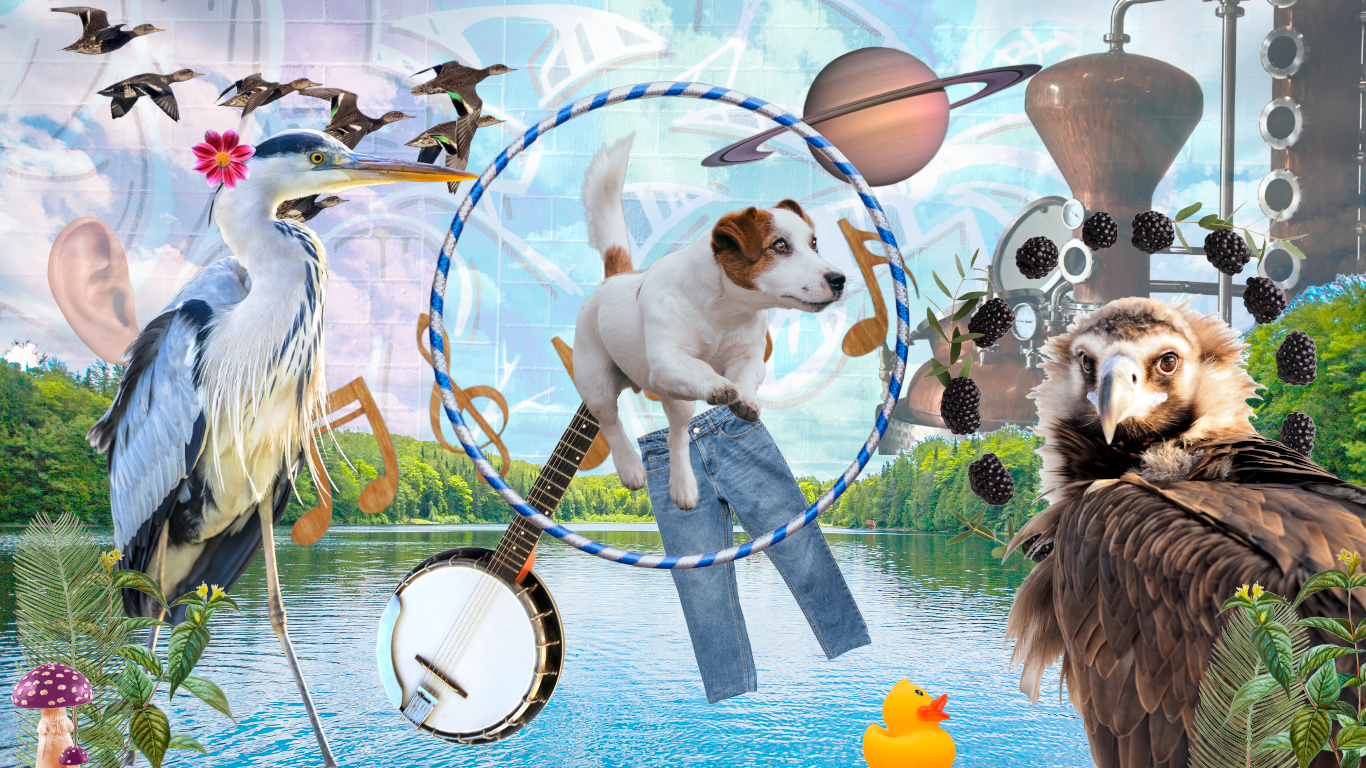
Welcome to the High Perch, where we look for the hidden patterns that help creativity and life flourish. This is a space for translation. Taking what’s messy, overlooked, or hard to name, and turning it into something we can belong inside, like vultures. Transforming what’s been discarded into nourishment, our stories uncover beauty and renewal in places we were taught to write off. Today I am circling with Lara Eastburn, and if you can hear the thermal shifting, that’s because this conversation sits right at the intersection of language, intelligence, and belonging. Lara is a language and machine learning genius, which sounds impressive and it is, but that’s not actually the thing. The thing is how she uses language not to impress, not to obscure, but to make meaning legible. To help people feel less alone inside their own weirdness. To translate the chaos of thought, feeling, and systems into something you can stand on. She works with words the way some people work with maps, orienting you to where you are, naming the terrain, and reminding you that unfamiliar ground does not mean you’re lost. And yes, she has a potty mouth. We love situationally appropriate swearing. Not for shock value, but for accuracy. Sometimes reverence and irreverence are the same muscle. In fact, it was Lara’s invitation to just be weird that sparked the genesis of the Vulture Chronicles in the first place. Permission to stop polishing the bones and start telling the truth about what’s left, what’s important, and what can be made new. This conversation is about language as a technology of belonging, about intelligence that doesn’t flatten the human out of the system, about meaning making that leaves room for humor, grief, joy, and with a comfort for language that has a little grit to it. So settle in, stretch your wings.
This is a good one. Lara, welcome. Can you begin by giving us a little background about you and what it is you are creating?
Lara Eastburn: Hear, hear. I’m so jazzed by that intro. I’m gonna wanna use some of those.
Barbara: Absolutely there for you.
Lara Eastburn: Background. Oh lord. You know, at this age, it’s huge. I started making businesses when I was 12. It’s really all I’ve ever done. But the one before this was part of the adult-sized hula hoop revolution. So I manufactured and retailed adult-sized hula hoops, the kind that light up and set on fire and all of that. And as more and more hooping businesses came onto the stage, I was like, oh, well shit, I guess I have to learn social media. It was brand new then, you know, so new. It was a wide open field, and so I started posting things, and it was crickets. And then one day I made a post and it just went wild as posts used to be able to do back in the day. And I’m such an academic, I got a doctorate in linguistics, and so I immediately wanted to know, I wanted to analyze it all. Like, how did that work? Why that one? And it was this picture of my husband and my daughter sitting down by the lake, by the fence. My husband was answering customer service calls, and I did probably some little witty post about it. And I was like, that’s why. When it comes down to hoops, they’re all kind of about the same, you know? So how do people choose which company to work with? And I realized it was the humans behind the business that they cared about. Could they trust them? Were they gonna get good customer service, all of these things. And I was like, oh, well it’s ’cause I spoke human instead of speaking hoop. And that was the beginning of Speak Human. Once I’d kind of put those two things together, they were right in line with everything my grandfather had taught me about marketing back in the day, and sales, which is just tell the truth and ask for help. So that’s how I started advertising. I started helping the other hooping companies. I realized, you know, they’re passion-based businesses. They started it because they loved hooping, but that didn’t mean they knew how to run a business. So I started advertising our hoops and their hoops, and then I realized I was selling hundred-dollar hoops and I could sell anything if I could speak human. So that became the first iteration of this business.
Barbara: Amazing. I love the background story. I had no idea about the hoops. That’s phenomenal. So what is something you never expected to get away with?
Lara Eastburn: Oh. Never expected to get away with. I always expect to get away with it! Who’s gonna stop me? I mean I’m perpetually surprised by how well things go sometimes. I guess my hesitation is the words. It always is, right? And it doesn’t feel like I’m trying to get away with something. I might be trying something totally wild and new that people around me aren’t doing, but it’s always a pleasure when it turns out. But I’m not trying to get away with anything. I’m trying to test my own boundaries. I’m trying to see how far I can go and, when you get there, there’s always a new challenge. That’s what I like. I’ve gotten away with it all, Barbara.
Barbara: It sounds like you find the edge and then you look for the new edge.
Lara Eastburn: Mm-hmm.
Barbara: Right on. If your creative process had a spirit creature or if there was an animal that felt most like your creative style, what would that creature be?
Lara Eastburn: So I clearly knew this question was coming. Every time people ask for a spirit animal, I’m like, I don’t know, but I’m going to say waterbirds in general. So I’m a big water person and we live on a little lake right here and there’s a blue heron that rocks my world. So I think in general, but definitely it comes down to the individual animal. You know, just like humans, there’s a lot of them out there, but sometimes you meet one that’s amazing and you recognize them. So the animals as individuals, you know, it’s like dogs. I like my dog. And then sometimes you meet the dog, they’re like, oh, you’re special.
Barbara: For sure.
Lara Eastburn: But my blue heron out here, she’s pretty special. Ducks fascinate me, so I like to watch the waterfowl.
Barbara: I hear that, especially the relationship with the individual animal and when you live in a place and you and that blue heron encounter each other, one way or another, you get to see them and observe them, and it’s almost like that connection builds over time.
Lara Eastburn: She just stands there and she just looks at you, you know? But I also like watching the birds, like just flying. Like here’s this huge resource, right, full of everything they could possibly ever want, and they just come down and grab what they need and go about their day. So…
Barbara: Mm-hmm. Yeah. Lovely. What is a piece of advice you love ignoring?
Lara Eastburn: Almost everything on the internet with the word “should” in it. A piece of advice with the word “should” in it, that’s a red flag for me. Telling me what I should do. I’ll run immediately. My ears close and we’re done. Yeah, it’s like what I like to tell my people, the only thing you should do for your business is whatever works for you. Like, oh gosh. As soon as we start doing what somebody tells us we should do, then we’re doing things like everybody else, which will never get us where we’re trying to go.
Barbara: Can you tell me about a time when you thought a project was a disaster but it turned into something great?
Lara Eastburn: I don’t have a lot of regrets, right? I’m always like, yeah, well, we tried that. It doesn’t work. It’s hard to be in business, right? If you’re gonna dwell on every disaster. I don’t know. I can tell you about when my husband thought it was a disaster. So in the hooping business, we were particularly known for LightUp hoops, LED hoops. And then I invented this kind of plastic, it was called color polypro. So it was a kind of plastic that people could make later hula hoops out of. We were making this friction fit thing to connect the plastic together that was really cool, and it was easy to travel with. And I told my husband, we’re gonna make a video series that shows everybody how to make these hoops. And he’s like, “Are you outta your mind? Why would we show people how to do this really cool thing we’re doing?” And I was like, “Look, the people that are gonna DIY it are gonna DIY it, let’s show ’em how to do it. But what I hope most folks are gonna do is watch this video and go, yeah, no thanks. Why don’t you go ahead and make that for me. Right? When they realize how much goes into it, you know, and it’s gonna take this much time, this much trial and error, all of this, they’re gonna be like, you know what? Actually that $60, $70 hula hoop is the perfect price. Please send me one.”
Barbara: Yeah.
Lara Eastburn: So, but it was also this exercise in how sharing knowledge is never the wrong move. You know, like there’s nothing so proprietary that you can’t share it because it’s in the execution of it. It’s in the making of it. Either you’re a maker or you’re not, you know?
Barbara: Yeah, I really hear that because I am a hundred percent the person in the camp of “that’s really interesting and I’m gonna watch it and I’m still gonna just, I’m not gonna do that. I’m still gonna just buy your thing. Thank you. A hundred percent.”
What’s something that you’ve let die in a good way to make space for something better?
Lara Eastburn: So many things. I’m a minimalist in space, right? And like in our spaces, I don’t like to have things. But also in my mind and in my friendships and houses, you know, places I lived. I can let go, not this one though, this one’s tattooed on my chest. I’m here to stay. But things that I’ve let die, things that I’ve let go… I’m such a sponge, I’m such a student that, you know, if you know something that I don’t know, I’m gonna just sit at your feet until I learn it up, you know? And then hopefully we learn from one another. And then sometimes it’s time to part ways. It’s like, wow, thank you for that gift, you know, next. I’m just an eternal student. I, yeah, I don’t know, the business, Super Hooper too. That was the name of my business. That one, you know, gosh, it was such a part of my identity. But you know, I feel things reach the end, kind of like you feel like you need to get new pants.
Barbara: Yeah.
Lara Eastburn: You’ve outgrown these pants. It’s just a little tight, it’s a little constricting. And when I don’t have any more room to move, that’s when I know it’s time to move on.
Barbara: It’s a really interesting example of one of the things that I have come to understand about you, which is how much self-trust you have.
Lara Eastburn: Oh wow. That is the first time anybody has ever said that to me.
Barbara: That’s what I’m hearing throughout this whole conversation and from working with you, is like, and that’s why I think that ability to push edges, ability to not even categorize something as a disaster that turned out great, but like you trust what you already know and what your body is telling you about. Like, it’s time to be done with this, or it’s time to do something new.
Lara Eastburn: Well, thank you for mirroring that back to me. That’s a gift and I’m very grateful. Trust. I mean, what’s the alternative? I can’t trust anybody else’s experience. But how many times has life proven to us right? Especially at a certain age, that like, the sky actually never falls.
Barbara: Yeah.
Lara Eastburn: Right? And I surround myself with really good people. So I don’t know. I don’t ever feel like I’m gonna fall.
Barbara: Awesome. Next set of questions are fun. Not that they’re not all fun, but these are like extra fun.
Lara Eastburn: They’re so hard. They’re hard in this wonderful way because it’s not the way we think about things. So it makes us… Of course, I’m just gonna reflect on your whole process here. But the way that you’re formatting this language, right? You’re forcing us to make connections where we would normally not, and that’s how they yield such cool answers. I love the Vulture Chronicles.
Barbara: Thank you. Thank you. What’s the weirdest inspiration you’ve ever pulled into your work?
Lara Eastburn: So I had an answer for this, I’m sure, but it actually changed, I think when you were reading your intro when you said, this is a space of translation, and it made me remember, that’s what I wrote my dissertation on. It was translating bodies like actual biographies of translators, like the process of translating a text. And how they take it in, they read the text and they have to like, take it in some corporeal way, right? All these metaphors of gestation and digestion, and to create something new that has part of them in it. Like there’s no such thing as an immaculate translation. And I consider most of my work to be translation, right? I call it distillation. But it really comes from all that time I spent thinking about how things come into the world as words, right? Like every time we create something, we’re literally pulling it out of the ether and putting it into a physical form. It’s amazing.
Barbara: Yeah. Incredible. If you could scavenge a skill or a talent or an idea from anyone or anything, what would you grab?
Lara Eastburn: Ooh. I think like event planning, it’s a weird question. Yeah. Or spatial awareness, visualization. Like, I have aphantasia, which means I can’t visualize, right? So if you tell me to picture something, I cannot picture it. You have to draw it for me. You have to show me a picture. So that kind of fascinates me how people can just imagine visually things. So that is a skill that I do not have. And I think event planning, because you’re creating this container for a particular kind of experience. And then that goes into that just wows me. You know, the decorations, the scents, the food, all to make, all to ease the introduction of people to one another. You know what I mean? All to ease that really awkward space of being with other people.
Barbara: Yeah. Yeah. That’s such an interesting and practical thing to grab, and I think it’s easy to look at event planning from the outside and be like, oh, you know, it’s just a checklist.
Lara Eastburn: A checklist, right.
Barbara: Yeah, but it is absolutely not, and I know two really super talented people who are event planners in different spaces. And the detail and the nuance of how they’re interpreting the feedback of the kind of experience that’s desired and how they then create that out in the world is a very specific skillset. So that’s really interesting.
Lara Eastburn: Translating vibes.
Barbara: Yeah.
Lara Eastburn: Somebody says, “I want it to feel like this.” And then they translate that literally into the physical space. Yeah. Maybe that’s why. Cool.
Barbara: Where in your life do you feel most creative outside of work?
Lara Eastburn: Oh, that one’s easy. Okay. I’m a prolific songwriter. I’ve written hundreds and hundreds and hundreds of songs. I’ve been in a band for over 20 years, and so there for sure.
Barbara: Amazing, amazing. Can we find your band on Spotify or somewhere, or is it just for like local and fun playing?
Lara Eastburn: No, no, it’s all on Spotify. So Music Weekend is what we’re called. We’re all scattered now. So once a year at least, usually twice, but once a year at least, we all come together from Pennsylvania and New York and Texas and Georgia, and we all come with songs that we’ve written and we workshop ’em right there. And we put out an album in a weekend, every year.
Barbara: Do you play an instrument?
Lara Eastburn: Well, I didn’t until I said I was the singer and the songwriter and I didn’t play an instrument until COVID. ‘Cause we couldn’t get together. So if we couldn’t get together, I couldn’t write songs because I would just write them in my head. Or I could sing them. So I would sing them to the band. I’m like, literally, “here’s how I want the guitar to sound. Here’s how I want the bass to sound.” And they would translate them for me. But then when we couldn’t get together during COVID, I was like, this sucks. I can’t write songs. So I was like, okay. I guess now is the greatest time as any to learn an instrument. So I picked up the banjo. Because, you know, we had enough guitars for God’s sake, and I wanna play the banjo. That’s like a weird, quirky, cool instrument. It’s got this kind of history. It’s kind of got built-in percussions. Great. I’ll learn the banjo, which is amazing. I wanted to learn it just well enough to accompany myself, just well enough to be able to write songs. So I just put out my second album. I’ve already finished the third. That’s part of that solo project. And oh my God, there’s so many tears involved. Like, to learn something new like that in your forties. That hurt. I like being good at things, you know, we only do the things we’re good at after a certain age. And learning banjo was brutal. But, oh my gosh, I’m so glad I did.
Barbara: Amazing. I love that. If you could leave a feather or a small messy gift for future creators, what would it be?
Lara Eastburn: Hmm. A messy gift. It’s not gonna be novel. Was it Hemingway that said “write drunk, edit sober”? Right. It’s kinda like that. You know, my creative process is really just about putting it all out, putting it all in there, getting it all out, and then even in the recording studio, we’ve got a new song, we’ll throw every instrument we have at it, and boy do we have a lot of instruments. And then what I’m looking for is how much can I remove and maintain the essence of the song, right? And that’s what I do with copy as well. We take all the words, blah, blah, blah. We make every single one of them earn their right to be there. So for me, process has a lot to do with taking things away. Right? Killing your darlings. Like they’re not all precious. What actually communicates here? ‘Cause they’re all, it’s all metaphor. These are all just ways for us to get an idea out of my head and into yours, which is so trippy if you think about it.
Barbara: You kind of anticipated my next question, which is… That’s okay, ’cause there may be more that you wanna add. I’ll ask it and we’ll see. What’s something delightfully unhinged about your creative process that you hope never changes?
Lara Eastburn: Yeah, that’d be part of it. I guess when the call comes, right, I stop everything to do it. It feels like creativity comes when it comes. And so I’m not gonna miss that appointment, right? Even though I don’t get to schedule it. So sometimes, you know, I feel like I’m creating in my sleep a lot, right? You go to bed with a question and you wake up with an answer. So I’ll wake up at two in the morning like, “Ooh, I’ve got an idea for that client’s copy.” Or just doing something else and a song comes and I have to stop what I’m doing right then and catch it, right? Gotta catch it while it’s there.
Barbara: Yeah.
Lara Eastburn: It doesn’t wait. It’s not gonna wait for me. So I do feel at the whim of its rhythms.
Barbara: Mm-hmm. I love that you make time for it, though. You’re not like, “Oh, I’ve gotta do this other very important thing right now.” You’re like, “Nope. Just the creative. We’re doing that right now.”
Lara Eastburn: Nothing’s more important than that, right? Than a gift from the mystery. Like, yeah, I’m here for it.
Barbara: Thanks. Okay, I’m gonna wrap us up. Language isn’t neutral. It’s a living system shaping how we make sense of ourselves and one another. Today, Lara Eastburn reminded us that meaning isn’t something we earn by sanding ourselves down, but something we create by telling the truth clearly and with care. When we allow language to hold our full weirdness, we make room for belonging to take root. What finally gets named may be exactly what lets us stand. Stay sharp, stay weird, keep circling. Until next time, I’m Barbara Evans, Brand Vulture, and this has been The Vulture Chronicles. How can people find you, get in touch with you, learn more about you if they wanna work with you?
Lara Eastburn: Yeah, it’s Lara, L-A-R-A, laraeastburn.com and that’s the only place you can go. Right, because I’ve got it down to one page. I’m totally reinventing right now.