The Vulture Chronicles: The Magician of Attention with Mimi Cherono
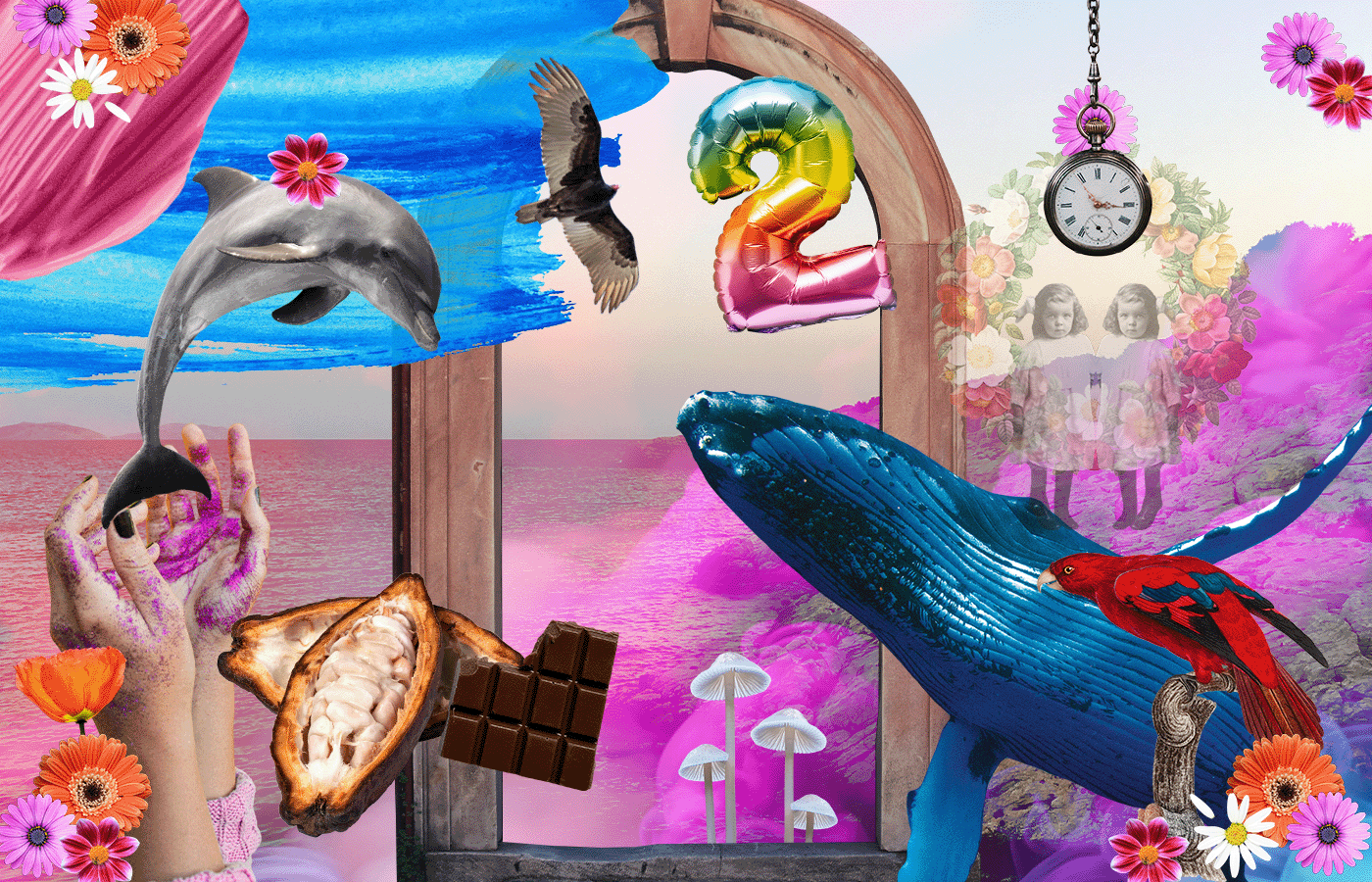
Welcome to the High Perch, where we look for the hidden patterns that help creativity and life flourish. Vultures turn what’s left behind into nourishment, and today’s guest knows a thing or two about transforming raw material into something sacred.
Mimi Cherono is a photographer and artist of the senses, and a chocolatier who understands the alchemy of attention. Her work invites us to slow down, to notice the soft edges of the world, and to let beauty arrive on its own timeline.
We also journeyed together through the Year of Surrender, a season of unraveling, releasing, and reforming. Mimi’s presence in that space was a masterclass in honoring both the seen and the unseen.
Today, we wander with her through the landscapes she tends. Memory, flavor, color, tenderness, and that quiet interior terrain where art is born. Let’s settle in. This one asks you to listen with your whole body.
Mimi, welcome. Can you begin by giving us a little background about you and what it is that you’re creating?
Mimi:
Thank you for having me, Barb, and thank you for that beautiful introduction. I really appreciate it. What am I creating? I’m creating myself every day. My world, my universe. I’m creating and learning a lot of things, learning new things. I would say I’m a magician, learning the alchemy of life.
Barbara:
Thank you. We’re going to get into some fun warm-up questions. What’s something you never expected to get away with?
Mimi:
That’s a good question. Could you clarify what you mean by “get away with”?
Barbara:
Something that seemed impossible. Something that felt out of reach for you, but happened anyway.
Mimi:
That’s a challenging question. I would say becoming an artist and remaining an artist through everything that has happened. All the adventures and challenges that came because I made the commitment so young, around 12 years old.
It wasn’t something I could consciously forecast. It was just a feeling I had. At that time, it didn’t feel out of reach. But after going through art school and learning more about art making, it did feel impossible at times.
I’m glad to come to the realization that I’ve been doing this long enough that this is who I am. This is my life.
Barbara:
That’s great. Thank you. I think it’s interesting with creatives and artists, that sense of “I can’t believe I get to do this,” that this is the focal point of your life.
If your creative process had a spirit creature, or if you had to choose an animal that feels most like your creative style, what would it be?
Mimi:
Dolphin came to mind because I’m very playful, in my work and in my life. Small animals that are agile, that do random, unexpected things. It could change. It could be a shape-shifting dolphin. A dolphin in the water that becomes a parrot.
Barbara:
Yes. I was picturing that, dolphin to parrot. Then I could see a little spider monkey doing clever things with its hands.
Mimi:
I thought about monkey a lot, but I wasn’t sure if I wanted to go in that direction. The play that monkeys have resonates with me, the lightness of movement, going places.
I once met a troop of monkeys, and one of them had an eye that didn’t work and a hand that was also different. I don’t know what happened, but it felt like a magician. Like two magicians speaking to each other.
Barbara:
That’s incredible.
Mimi:
Yes.
Barbara:
I love that.
Next question. What is a piece of advice that you love ignoring?
Mimi:
“Relax.” If I could tell myself that and it worked, I would. Someone else telling me to relax doesn’t help me.
I also think there’s possibility in spiraling. There’s a moment to relax, and there’s a moment to let yourself go through all the emotions you need to get there. Sometimes people cut that off and tell you to relax, and that’s not what I need.
Barbara:
That’s interesting, because I think people often mean well. But it asks you to bypass your experience. You need to move through those passages before your body is ready to relax.
Can you tell me about a time when you thought a project was a disaster, but it turned into something great?
Mimi:
All the time. All my projects. That’s the story of how I work.
Specifically, right now, my chocolate project. I didn’t know what I was getting into. It was an impulse I followed, and things started falling into place.
At times, when I was looking for cacao, the place I wanted to source from wasn’t available or couldn’t export. There were a lot of bumps along the road. Each time, I wondered if I should really be doing this.
But the impulse kept me going. Things would open up. I’d learn how to design a chocolate mold. I’d find videos about chocolate making. I’d read about different varieties of cacao.
The discovery and novelty were expansive and spacious. That was the fuel that recharged me. As it slowly came together, bumps still happened. I embrace them now. I think, what adventure are we going down today?
Barbara:
Thank you. What is something you’ve let die in a good way to make space for something better?
Mimi:
Versions of myself that I outgrew. Tangibly, that meant releasing old clothes and objects from different parts of my life.
I appreciate who I’ve been in my becoming. I love those versions of myself. And I celebrate who I’m becoming now, given the elements that make me who I am today.
I’m thankful for the deaths I’ve experienced, for the composting of parts of my spirit, personality, and body. I’m eager for the newness that’s arriving.
Barbara:
That really lands, especially with your description of yourself as a magician, an alchemist.
What’s the weirdest inspiration you’ve ever pulled into your work?
Mimi:
Can you clarify what you mean by weird?
Barbara:
Unconventional.
Mimi:
Making chocolate. It was unusual for everyone who knows me. Now that it’s out and people are interested, it feels like such a pivot.
I love making things. I love being in the process of making anything. It felt like the next step. I see how it’s unusual from the outside.
Barbara:
If you could scavenge a skill, talent, or idea from anyone or anything, what would you grab?
Mimi:
I’m going with two.
Barbara:
Mm-hmm.
Mimi:
A whale, for its deep breathing and its travel. I love water, swimming, and being in the sea.
Another skill would be comfort in conversations with the dead. To feel at home with all that is alive around us, whether or not it fits into the material world.
Barbara:
I love your willingness to say, I’m taking two.
Mimi:
That’s very me.
Barbara:
I wish more people felt free to do that. The whale makes so much sense. And speaking with the dead, the wisdom available there.
Where in your life do you feel most creative?
Mimi:
In my dreams. They’re transient. They’re comforting. They let me access parts of myself I wouldn’t consciously, and they’re a passage to other worlds.
Barbara:
I’m going to bring us in for a landing. If you could leave a feather or a small gift for future creators, what would it be?
Mimi:
A stone. Or a rock. Stones carry so much history, geologically. They remain regardless of time passing. They’re timekeepers in their own way.
The age of a stone is very different from the age of a human. Different ways of keeping time. That’s what I’d want to gift the future.
Barbara:
What’s something delightfully unhinged about your creative process that you hope never changes?
Mimi:
“Unhinged” is a strong word.
Barbara:
It is. The invitation is to be a little crazy.
Mimi:
I already am. My mind doesn’t follow a straight line. I pull from different sources and channels, not a singular one.
It’s about allowing influence to come in however it chooses, rather than insisting on one way of doing things. That’s how I live and how I work.
Barbara:
Having spent time with you this year, what I’ve observed is your willingness to create your life day by day with intention. It’s fluid, creative, and joyful. It’s been a delight to witness.
Mimi:
Thank you, Barb. Thank you for the witnessing. I really appreciate it.
Barbara:
Creation is rarely linear. It’s more like a long, slow melt, ingredients coming apart so something new can come together.
Today, Mimi reminded us that artistry isn’t just what you make with your hands. It’s how you pay attention. How you gather fragments. How you let yourself be changed.
From the hush of her photography to the sensory devotion of her chocolate work, Mimi showed us that creativity can be an act of tenderness. A way of saying, “Here. This is what the world feels like from where I stand.”
And maybe that’s the quiet invitation she leaves us with. To let our senses guide us. To trust the beauty in the overlooked. To remember that surrender can be its own kind of art.
Until next time, keep circling with curiosity. There’s always more to find when we meet life from the High Perch.
I’m Barbara Evans, Brand Vulture, and this has been The Vulture Chronicles.