
The Vulture Chronicles: Second Bites and Creative Afterlives with Brooke Hofsess
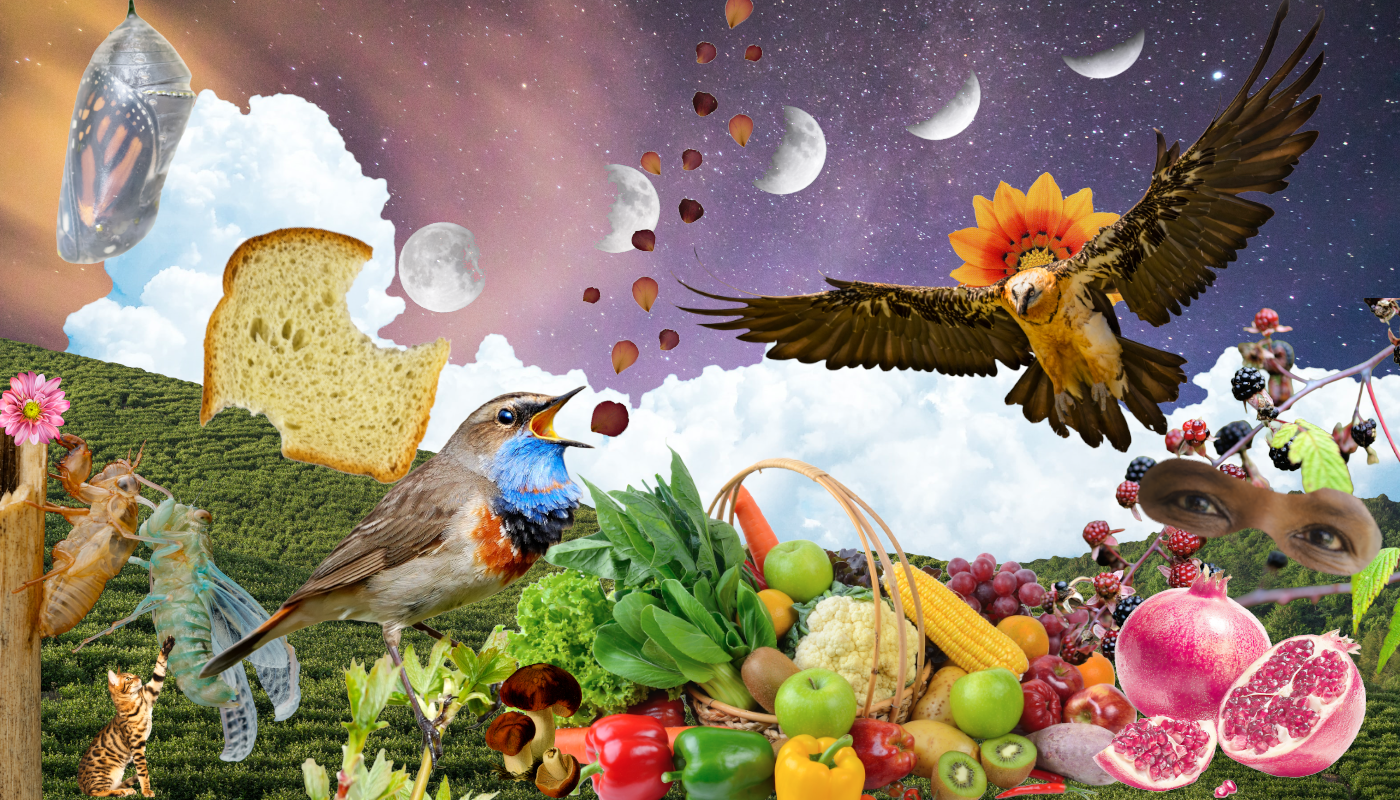
Welcome to the High Perch, where we look for the hidden patterns that help creativity and life flourish. Just as vultures transform what’s been discarded into nourishment, our stories reveal beauty and renewal in what we once thought was loss.
Today we’re speaking with Brooke Hofsess, artist, teacher, and midlife midwife who helps women unhook from the myth that more doing leads to more aliveness. Through her coaching and creative practice, Brooke guides women to shed the polished armor of perfection and make space for something wilder, truer, and more alive to emerge.
Together, we explore what it means to compost old identities, release the “good woman” story, and rediscover the creative pulse beneath all that striving.
Brooke, welcome. Can you begin by giving us a little background about you and what it is that you’re creating?
Brooke Hofsess:
Absolutely. But first, I just want to say thank you so much, Barbara. This is such a delightful project. It’s so creative, and I’m really excited to have this conversation. Thank you.
Yeah, so as you mentioned, I do a lot of different creative practices, and I think for a long time I struggled to understand how they really wove together into something coherent. And I was living with a story that a lot of creative people live with: that I was too scattered, too unfocused, too unclear about what I’m truly meant to be doing.
And I’m just so done with that story. I’m at a point in my life where it feels really good to answer this question with a different kind of clarity. Like an “in my bones” clarity that I’m here to create a revolution of women in midlife who know their values and know their value. I think that last piece is really important.
I think a lot of women do the work to get clearer on what matters to them, and they’re really in integrity and living courageously into their values. But sometimes that last piece, really knowing their worth and their value as-is right now, exactly in this moment, perfectly imperfect, is the missing piece.
And I’m really honored to work with women to come into that in a bigger, bolder way.
Barbara:
Yeah. Wow. I love that. That’s so reflective of my own experience of moving through life, figuring out what matters to me, and learning to value myself and what I bring to the world. So much. Yeah. Much needed.
Brooke:
So needed. It’s so needed. And that’s why I really respond to your metaphor of the vulture. This idea of scavenging as nourishment. And reframing the idea that picking up different pieces along the way is not the journey, or that it’s some kind of distraction, when for a lot of creative people it’s the true nourishment.
Barbara:
Thank you. Yeah. So we’re going to warm up with some fun questions here. What’s something you never expected to get away with?
Brooke:
So this time last year, at least in the U.S., I think life was disrupted for a lot of women around the presidential election. And it really got me outside of my comfort zone in terms of my creative practice and my coaching practice.
I had been primarily working with women one-on-one, and doing small group programs for short amounts of time, like four weeks together. And I just had this really strong sense that women were going to need a different kind of support and community in the coming year: to hold each other differently, to be held differently.
And so I just took a lot of walks with that feeling. And I don’t know if your creativity ever works like this, but I got this “download” for a year-long program. I sat down and wrote down these twelve different themes that would flow in a certain order. And I ended up, without any real belief that it would actually happen, typing it up in a Google Doc and emailing it to a bunch of people.
And that became this body of work, Second Bite, that has been so transformative for me and for the women who’ve come into the program.
Yeah. I didn’t think I could pull it off. It was one of those things where life kind of opens a door and you think, “Well, what have I got to lose?” And it’s become something that I never want to be without. So I’m really glad that I answered the door.
Barbara:
Yeah. Against all odds. Sorry, I get excited and then I start talking and you’re not necessarily always done with your idea.
Brooke:
No, it’s great.
Barbara:
There’s something really powerful about being on a journey of that length and magnitude with a core group of women. You become intimately woven with them.
Brooke:
Yeah.
Barbara:
It’s a totally different experience than what I think of as sort of traditional coaching, like pop-up containers. Even four weeks long seems really short to me now. So it’s incredible that you felt into the big moment we were all experiencing and got really clear: this is what I need to offer right now.
Brooke:
Yeah. And I’m glad that other women were feeling it too, because it made me feel less alone.
And the kind of growth that I’m really interested in, I use a lot of organic metaphors in my coaching practice. The kind of growth I’m interested in is more about creating the conditions for spontaneous, natural processes to emerge.
When we have a full year together, we can really sink into that and practice creating the different conditions. And what I find is that by the time so many women come into my practice, they’ve been piecing it together through a binge of a podcast, or they read one author’s whole body of work, but they’ve never had a place where they could come, drop in, and be held for a sustained amount of time.
They’re so used to being the architect of their own growth. And that is a bigger lift than I think we give ourselves credit for. It’s a lot of work to piece together your own professional growth year after year after year.
Barbara:
Yeah. And there’s a big difference in terms of the growth you can achieve when you’re skillfully held.
Brooke:
Yes. That holding creates safety that lets you open up and get to your edge.
I was just talking with one of the women in the program, and she was talking about this boldness that has come up in the gentleness of the container. And I just thought that was… I mean, I love paradox. That’s one of my big themes in life. I’m such a paradoxical creature.
But yeah, I don’t think it… a lot of people think of coaching as “leap and the net will appear.” And I’m just not here for that. I’m not going to jump and hope somebody comes up to save me. I would rather work from the root and build something that’s really strong from the inside out.
Barbara:
Yeah. It takes time.
Brooke:
It does.
Barbara:
If your process had a spirit creature, or maybe a better way to say that is: what animal feels most like your creative style?
Brooke:
I love this question so much because I think creativity is so creaturely. It’s so instinctual. And culture wants everyone to think it’s something you have or you don’t. You’re an artist or you’re not.
And I really think that it’s such a part of our human inheritance. When we decide we are not creative, or we box ourselves in terms of how we are creative, we miss out on all those creaturely impulses.
So I would say no one animal really comes to mind. But I would say that I really prioritize the creaturely nature of creativity. So my creativity has cocooning phases where I go through the chrysalis time. And I have the feasting phases, and then the hibernation. And I have the shedding of old skins, and then feeling into the renewal. And I just let myself have all those different expressions because it’s important.
Playfulness is a big one for me. Like that young, playful energy and making something that you don’t know… there’s no point. Yeah. There’s no point.
Barbara:
You have a beautiful pantheon of animals.
Brooke:
Yes, I really do. I do.
Barbara:
And I love one of the things that you talked about: the humanness of creative expression. This is something that’s been coming up for me a lot lately. There are some things that we just innately do as humans: create, make art, sing, dance. And we’ve gotten to this place where we believe you’re not allowed to do those things unless you can be good at them.
But you don’t have to go too far back, like less than a hundred years, and singing around a piano at home was something everyone did. It was part of how you spent family time before televisions or radio, you know?
And I think it’s kind of tragic that we’ve gotten away from that, and that we aren’t just getting together and singing and dancing like the little animals that we are.
Brooke:
Yeah. It really has gone missing in modern life. And I just spent a week on retreat with a group of 25 women, and we sang and we danced and we made art every single day, and it felt so good. Yeah. I’ve never felt so good.
It’s very nourishing. And even though I’m not necessarily quote-unquote good at any of those things, it fed me on such a deep level.
Barbara:
Mm-hmm.
Barbara:
Awesome. What’s a piece of advice you love ignoring?
Brooke:
There’s so much advice I love ignoring… most advice.
Barbara:
Great.
Brooke:
“Don’t rock the boat.” I love ignoring that one. “A woman never tells her age.” I love ignoring that one.
And I think sometimes I start feeling a bit vulnerable about creating a body of work, about supporting women in the second half of life, because there’s so much in the culture that wants us to just go quietly into the night. And it can feel vulnerable to be a vocal advocate that says: our culture really needs everything that older women have for us right now, more than ever.
We’re seeing it in every direction you look, and the cruelty and the consumerism and the “power over”… all of that.
But it does sometimes feel… I like this question because it reminds me that I am going against the conventional advice.
Barbara:
Yeah.
Barbara:
Can you tell me about a time when you thought a project was a disaster, but it turned into something great?
Brooke:
Yes. A few years ago I started a “podcast,” using air quotations, because I named the podcast, created the cover art, wrote outlines for I think one or two full seasons of episodes. Like I really went for it in a very, very big way. And yet I never recorded or published a single episode.
And I even hired a coach to help me with it. I mean, I went all in on this idea.
And going back to your question about creativity and that kind of animal instincts or qualities: I was so determined. I put the goal ahead of my own way of being. I put the goal of creating a podcast ahead of my way of creating. And it completely didn’t work. I couldn’t bring myself to go all the way through with it.
So for a long time I felt a decent amount of shame that it was a failed project. But I think the real learning in that for me was: I’ll do it when the time is right, and I have to do it in my way.
Barbara:
Yeah.
Brooke:
And I have to let myself go through that organic, spontaneous process of maturation, and let the project have its own liveliness that I have to honor and respect. I can’t just push through and make something happen. It’s just not the way that my creative process works.
No matter how much it makes sense on paper for me to do a thing, I won’t be able to do it. I just won’t.
And I think that’s part of the work that I’m really interested in with other women, right? So many times we judge ourselves about our particular way of being, or our process of making or working, and it keeps us out of doing the work we’re really here to do, because we’re trying to do it. We’re trying to put the goal ahead of the way that we meet goals.
Barbara:
Yeah. And it’s like we’re taking some external, predefined structure and applying it to the thing, and then all of a sudden there’s lots of friction in a bad way that doesn’t work for us.
Brooke:
Yeah. And it’s like we can’t fully actualize ourselves in the goal because there’s something off in it.
And I think for a lot of older women, what I think of as our inner goal-maker is kind of messed up. Because we’ve been so expected to do certain things at certain points of life. You start your family at this point of life, you do this…
It can really throw us off from that internal spaciousness that sometimes we need to figure out what’s ours. And the timing of that doesn’t always go in the traditional way.
So even though on paper it looked like it was time for me to start a podcast, it wasn’t. Right? And it’s not a failure.
What would the vulture say about that? Yeah. Like you could live off those scraps for a while.
Barbara:
Yeah. There’s a lot there to feast on.
Brooke:
There’s a lot there to feast on… if you let yourself do it.
Barbara:
Awesome. What is something that you’ve let die, in a good way, to make space for something better?
Brooke:
Hands down, it has to be perfectionism. Hands down.
I love what Anne Lamott wrote about perfectionism: it will keep you sane your whole life, and it will keep you from writing that shitty first draft. I resonate so deeply with that. And I held myself back for so many years.
Yeah. And perfectionism is a way to keep myself small and safe, and I’m just so glad that I’ve had role models of how to lay that down.
Barbara:
Yeah.
Brooke:
Wow. Yeah. Perfectionism is so seductive, I think. And it’s also really bland. It’s also really, really planned. Stay safe. Who wants the perfect thing, right?
And the whole reason I have this wall of art behind me is because I want things that are made by a human hand and a human heart. If I wanted some perfect thing, that would bring a whole different energy to my work and my space.
Barbara:
Yeah. It’s so interesting. I think so many people will resonate with this idea of perfectionism being a trap. It gives us the illusion of control without actually providing any of the safety that we’re really wanting out of that control.
And instead, we’ve got this sort of impossible thing we’re trying to get to, that keeps us in this doom loop.
Brooke:
Yeah. In the doom loop and out of connection.
And I don’t remember if I picked this up from Brené Brown or from someone else, but this idea that trust is a three-legged stool: there’s trust in yourself, trust in others, and trust in the process.
When I really feel into that three-legged stool, I can really feel how perfectionism damaged trust in all three of those realms for me. I didn’t trust myself. I didn’t trust other people with my quote-unquote imperfect offerings. And I wasn’t trusting the process.
Barbara:
Yeah. Wow.
Barbara:
What’s the weirdest inspiration you’ve ever pulled into your work?
Brooke:
I love this question.
So about a year ago, I was asked to write a book chapter about mid-career professional development. And I knew I wanted to write it, but I didn’t know how to write it in a way that would shake people up in the normal conversations about mid-career.
And so I brought in the reference point of Stone Soup, which is a folktale. Do you know the folktale?
Barbara:
Yeah.
Brooke:
And this idea that for so many of us, we go through our early career and into mid-career going it alone, and being so dominated by scarcity. It’s never enough. We’re not working enough, we haven’t networked enough, we haven’t saved enough money, and we forget that we can come together and share resources and be supported.
And so that folktale became sort of a, I think, unconventional intervention in the way we typically think about supporting people in mid-career. And it was really, really fun to write it because it felt like I was writing something new and old at the same time, if that makes sense.
There was this really clear contrast between the old story and this new context that I was weaving it into. So it was a little bit of a challenge in terms of creative process, but also I don’t know that I’ve ever loved writing a piece quite so much. It was really fun.
Barbara:
Fabulous. I love that. If you could scavenge a skill, talent, or idea from anyone, what would you grab?
Brooke:
Probably singing. I love being in spaces where women are singing, and I’m receiving that gift, their gift.
And I’ve always wanted to be brave enough to sing to my clients, and I have not done that yet. I’m working on it. But I would absolutely want to scavenge that skill.
I have two beautiful sisters, and they’re both incredible singers. And my daughter would tell you that I’m a singer, but it’s not a piece that I wear very comfortably.
And I would really love to have that fluency.
Barbara:
Yeah. I love that. I suspect that it’s available to you, and I’m glad to hear that you’re stepping toward it.
Brooke:
Yeah. A good friend of mine just signed up for singing lessons, and I had that little thing of like, “Oh… I hadn’t even thought about it.” Right? There are people that could help me with that.
Barbara:
Yeah. And there are lots of ways to give yourself some safety to step into it too. Like maybe there’s a group singing thing, a choral situation, so your voice feels supported and not like you’re the only one everyone’s focusing on.
I’ve thought about this before, right?
Brooke:
I love it.
Barbara:
We’ll do it together.
Brooke:
Yeah. We’ll go in on singing lessons together.
Barbara:
Yeah, I’m here for that. Because my own story with singing… we’re going to go on a little side quest.
I went to Catholic school growing up and we would do these holiday Christmas pageants, right? And we all got different parts. And I can remember one year, I was probably in first or second grade, and one of the teachers at the school, as we were going through rehearsal, came up to me and literally said to me, “You shouldn’t sing.”
That stayed with me for a really long time. I was up on that stage just lip syncing. I didn’t do any of the singing stuff at church anymore. I never… you know. And as a person who has a deep, obsessive love of music, it’s kind of tragic.
And I didn’t start singing again until I had babies, and I would sing just to my babies. Or like in the car by myself, right? So I’ve been slowly testing out other places where I could sing.
There have been some groups, some things. Starting to sing in my safe space in the car while there are other people in the car. You know? Things like that.
But it’s so interesting how fraught that can be for some of us. There’s such a vulnerability about it for me.
Brooke:
There’s such a vulnerability about it. And, you know, I had a similar experience as a young person, singing with my cousins, and one of my uncles said something like, “Well, don’t quit your day job. You’re terrible.” And it was so painful.
And it held me back from using my own body and voice to be expressive for a long time. I think so many of us carry those early creative wounds.
And I think that is a gift of midlife: we stop kind of sticking our finger in the wound and pressing on it in a painful way, and start finding other avenues that we can begin to heal.
Singing to your babies, singing in the car… I mean, that’s just so beautiful, Barbara. And I think it gives me hope.
Barbara:
Yeah. Because it feels fundamental to our humanness.
Brooke:
Mm-hmm.
Barbara:
Singing has always been part of how we commune. And I think it’s something that’s been really lost for a lot of us.
Brooke:
Yeah. And lost in the name of being good at it. Like, we ride bikes even though we’re not professional bicyclists, and we do all kinds of things that we’re not good at. We feed ourselves every day even if we’re not five-star chefs.
So it’s an edge I’m really interested in for myself.
Barbara:
Both of us get singing lessons after this conversation.
Where in your life do you feel most creative outside of work?
Brooke:
I try to make my days as creative as possible. It’s not always that way. But, you know, I love to walk and daydream. I love to write and paint my dreams that I have at night.
I love to think about food and what I want to eat and cook, and cook with my daughter, and she’ll make playlists. I love bilateral drawing, which is drawing with both hands as like this deep nervous system reset. So I have big paper always taped up on my walls where I’m doing that in between meetings.
I’m teaching myself how to sew. My mothering and partnering, I think, is very creative.
So it’s pretty essential, I think, for my wellbeing and my mental health to have low-stakes, high-expressivity outlets to plug into.
I love wrapping things in embroidery floss, like stones and sticks, just as a meditation. The way that I’ll arrange my desk, you know, put certain objects on it.
So yeah, I really try to have that in my life because when I don’t, my inner spark is quite dim. And so I rely on that to keep myself strong spiritually and physically, literally and figuratively.
Barbara:
I’m so impressed with the ease and depth of the practices you have built into your day that provide that kind of creative support. Really incredible. There’s a lot to learn just from that for me.
Brooke:
Yeah. It’s a practice, though, like you said.
And part of it: there’s this Emily Dickinson poem that I read in my twenties, and one of the lines was about gathering paradise. And I took it to my husband, who’s a musician.
We kind of made a commitment to this idea of making our home a place where we could gather paradise. So there is a corner of my living room that is set up with my sewing machine and my drawing table. But if I don’t have it that way, I would never do it.
And so the permission to not have your living room… to have a corner of your living room look like a messy art studio, right? Like yes, there’s that. You know? Breaking the advice, right?
Barbara:
Yeah.
Barbara:
Awesome. Okay, so we’re coming in for landing here. We’ve got two more questions.
If you could leave a feather or a small messy gift for future creators, what would it be?
Brooke:
There’s the phrase that I come back to a lot: you’re out of breath, not out of courage.
And that is the feather I want to leave because I think that so many of us think we have a courage problem, like we’re not being brave enough or we’re not going after the things that we want.
But if we can step back and realize that culture has us running ourselves ragged… there’s so much. Just on social media, the news… just to be a living, breathing heartbeat in this world, that is burdensome and tiresome.
And so I just like to remind people that you’re not out of courage. You’re just out of breath. And we can hit that reset button and find ways to support ourselves.
Barbara:
Wow. Hearing that, I felt my whole body relax a little bit. Yeah. There’s sometimes what we need is to pause and breathe for a minute.
Brooke:
And just breathe. Yeah. And there’s nothing wrong with us. Nothing has gone wrong. This is just part of it. It’s part of the messiness of humanity, and it’s all part of it.
But we have more to give. I think we do. I think we have more to give.
Barbara:
Mm-hmm.
What is something delightfully unhinged about your creative process that you hope never changes?
Brooke:
It’s so funny because I always joke that it’s the one area of my life that I allow myself to be completely disloyal.
So, you know, I’ll be halfway through a book and I’ll put it down and decide that I want to make my own clothes and I’m going to teach myself how to sew. And I’ll start that process and then that will remind me of using thread to wrap things, and I’ll just go in a completely different direction.
And sometimes I’ll be doing all of those things at once.
So I just let myself really lean into that disloyalty, and I don’t make it mean anything about me. That I’m a generalist, or some of the language that you hear people saying when they wear a lot of creative hats.
I just let myself go to the place that I’m called and trust that it’s feeding a part of myself that I don’t have to really understand or even think about. I can just be in that creaturely way of like: this is just my expression today.
So that is probably how I would answer the question. Yeah. Just really letting myself be all over the place, and that’s good.
Barbara:
Yeah. I so appreciate that because we tend to apply judgment on ourselves for not finishing something or not seeing something through. And instead, you’re really operating from a place of deep trust in your own process.
Brooke:
Yes. Yeah. And that the… it’s not just me as a creative person making things, but that the creative process is its own entity, and it is finding me on the journey too.
So part of my work is to meet it and not exhaust myself in a story about, “Well, why did I lose interest in that?” And it frees up so much creative capacity for me to just let myself create in the way that is most meaningful.
Whether it’s writing, or sitting out on the hammock and wrapping a branch in teal thread. And just let myself do it and not take it too seriously.
I think I spent so many years taking myself so seriously, and I just want to roll my eyes and be like, “Oh yeah, honey.” Yeah. Go back and give her a little pat on the head and a hug and just say, “Oh sweetie, it’s not that big of a deal.”
Not all of your art has to have this thesis behind it. You can literally just enjoy it.
I think in a lot of ways art school kind of robbed me of some of that. And you know, I’m a big fan of art school. I teach in an art department. But I think that one of the interventions I try to make with my students is: just remember what brought you to art in the first place.
And let some of those expectations that you’re putting on your art go so that you can just be in a relationship with it.
Barbara:
Yeah.
Brooke:
Wow.
Barbara:
That’s great advice. Thank you.
Barbara:
Thank you for these amazing questions. Okay, I’m going to close this out.
Creation isn’t tidy. It’s a cycle of decay and renewal. And today, Brooke Hofsess reminded us that midlife isn’t a deadline. It’s a doorway. By softening toward what’s unraveling, we create space for new forms of aliveness to take root.
Stay sharp. Stay weird. Keep circling.
Until next time, I’m Barbara Evans, Brand Vulture, and this has been The Vulture Chronicles.
To continue circling with Brooke, you can find her at www.brookehofsesscoaching.com, where her work lives at the intersection of midlife, creativity, and gentle but radical becoming. Through her writing, teaching, and programs like Second Bite, Brooke creates spaces for women to release old stories and rediscover what still wants to live. Follow along to stay connected to her reflections, offerings, and evolving work.